
UX & Product Design Services
I provide UX research, product design, interface design, prototyping, usability testing, and design systems for websites, apps, internal tools, and other digital products.
With 13 years of experience across fintech, healthcare, telecommunications, and complex business software, I focus on making products clearer, easier to use, and better aligned with real user and business needs.
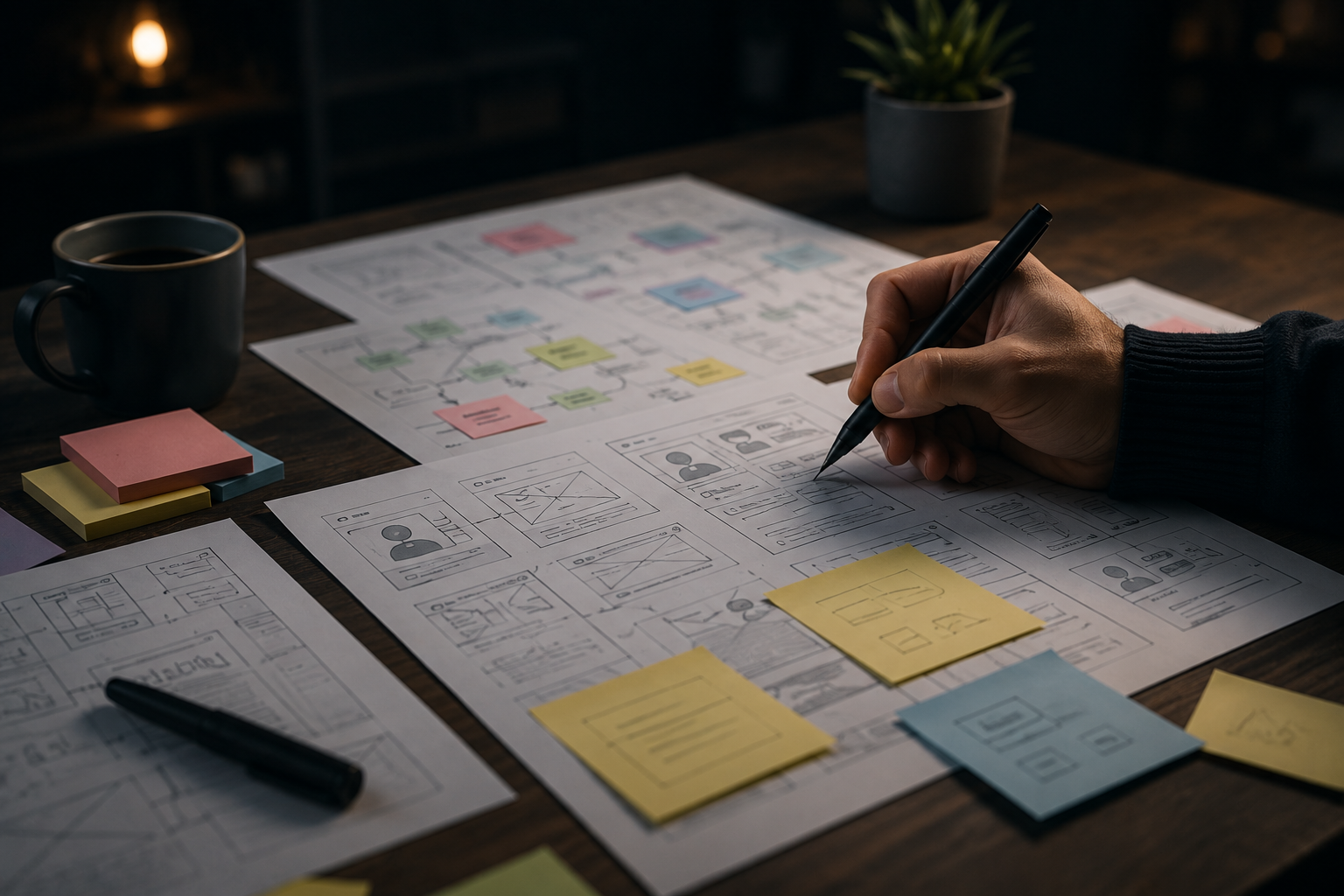
User Research & Discovery
Research helps uncover what users are trying to accomplish, where they are getting stuck, and what information is needed before making design decisions.
Depending on the project, research can include interviews, surveys, stakeholder conversations, competitive reviews, customer feedback analysis, and early product discovery.
Common Applications
Understanding user needs and pain points
New product or feature discovery
Reviewing existing workflows
Customer feedback analysis
Stakeholder alignment
Deliverables
Research plans
Interview or survey findings
User needs and pain point summaries
Journey maps and design recommendations
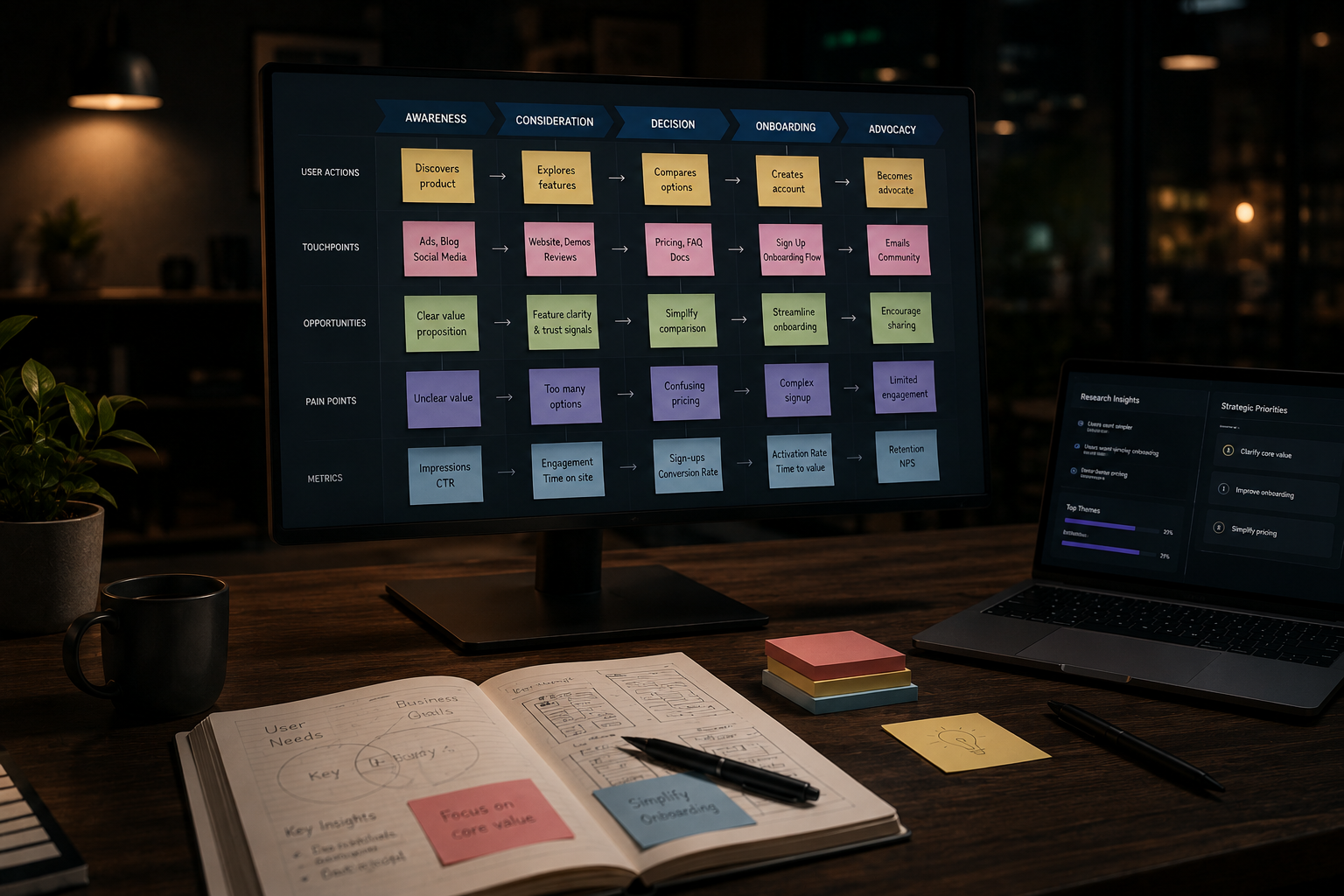
UX Strategy & Planning
UX strategy creates a clearer direction before detailed design begins by connecting user needs, business goals, product priorities, and the overall experience.
It can help organize a new product, clarify an existing experience, or determine which workflows and features deserve attention first.
Common Applications
Product and website planning
Feature prioritization
User journey planning
Workflow strategy
Stakeholder alignment
Deliverables
UX strategy recommendations
User journey maps
Feature and workflow planning
Priority and opportunity areas
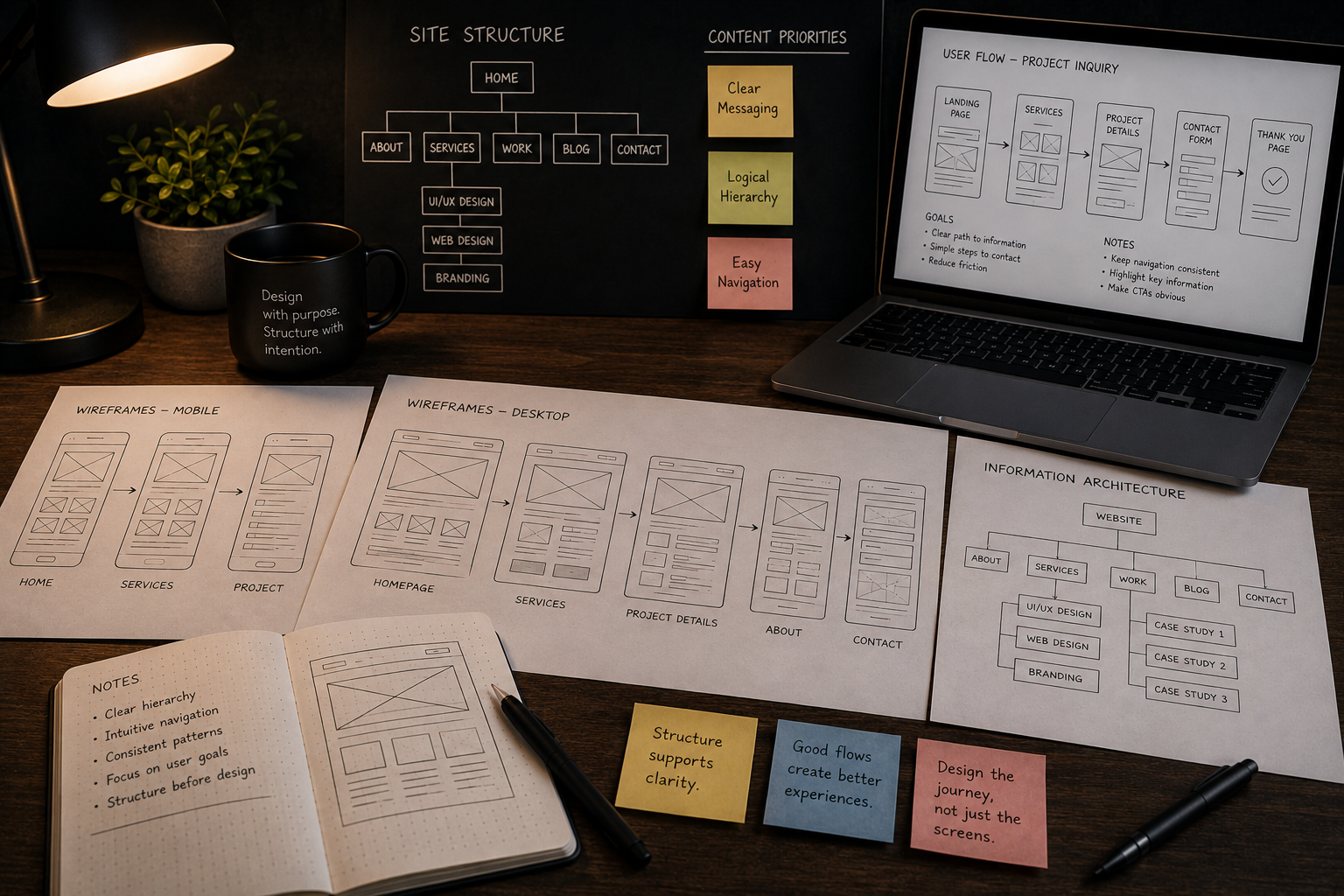
Wireframing & Information Architecture
Wireframes help organize screens, content, navigation, and user flows before time is spent on polished visual design.
This makes it easier to solve structural problems early and create websites, apps, and digital products that feel logical and easy to navigate.
Common Applications
Website structure planning
App and product layouts
User flow mapping
Navigation planning
Content organization
Deliverables
Low-fidelity wireframes
Page and screen layouts
User flow diagrams
Information architecture recommendations
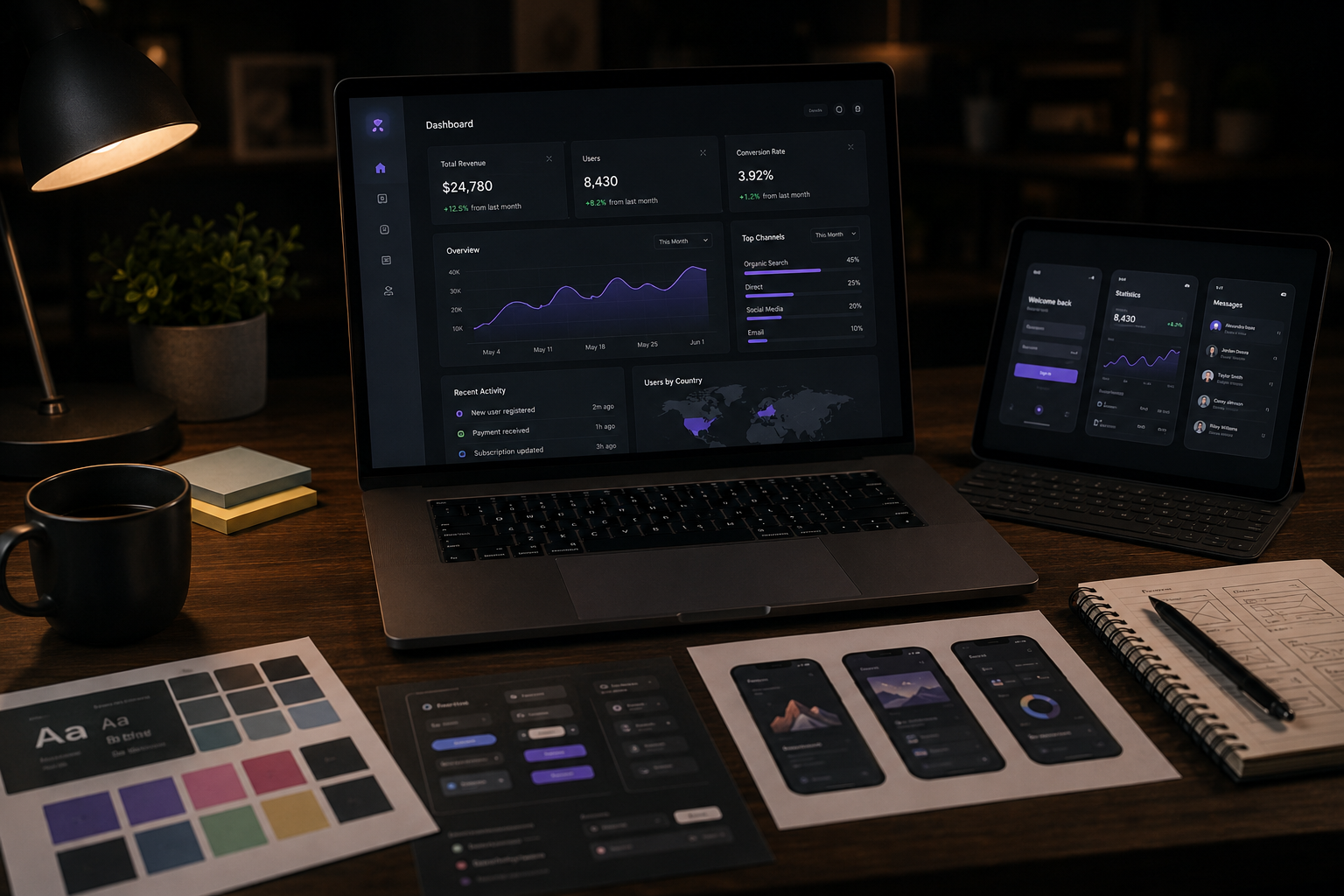
UI Design & Visual Design
Interface design brings usability, structure, and visual clarity together to create digital experiences that are easy to understand and consistent to use.
Design can include websites, applications, dashboards, internal tools, mobile experiences, and other digital products.
Common Applications
Website interface design
App and product screens
Dashboards and internal tools
Responsive layouts
Visual design refinement
Deliverables
High-fidelity interface designs
Responsive layouts
UI components
Typography and visual direction
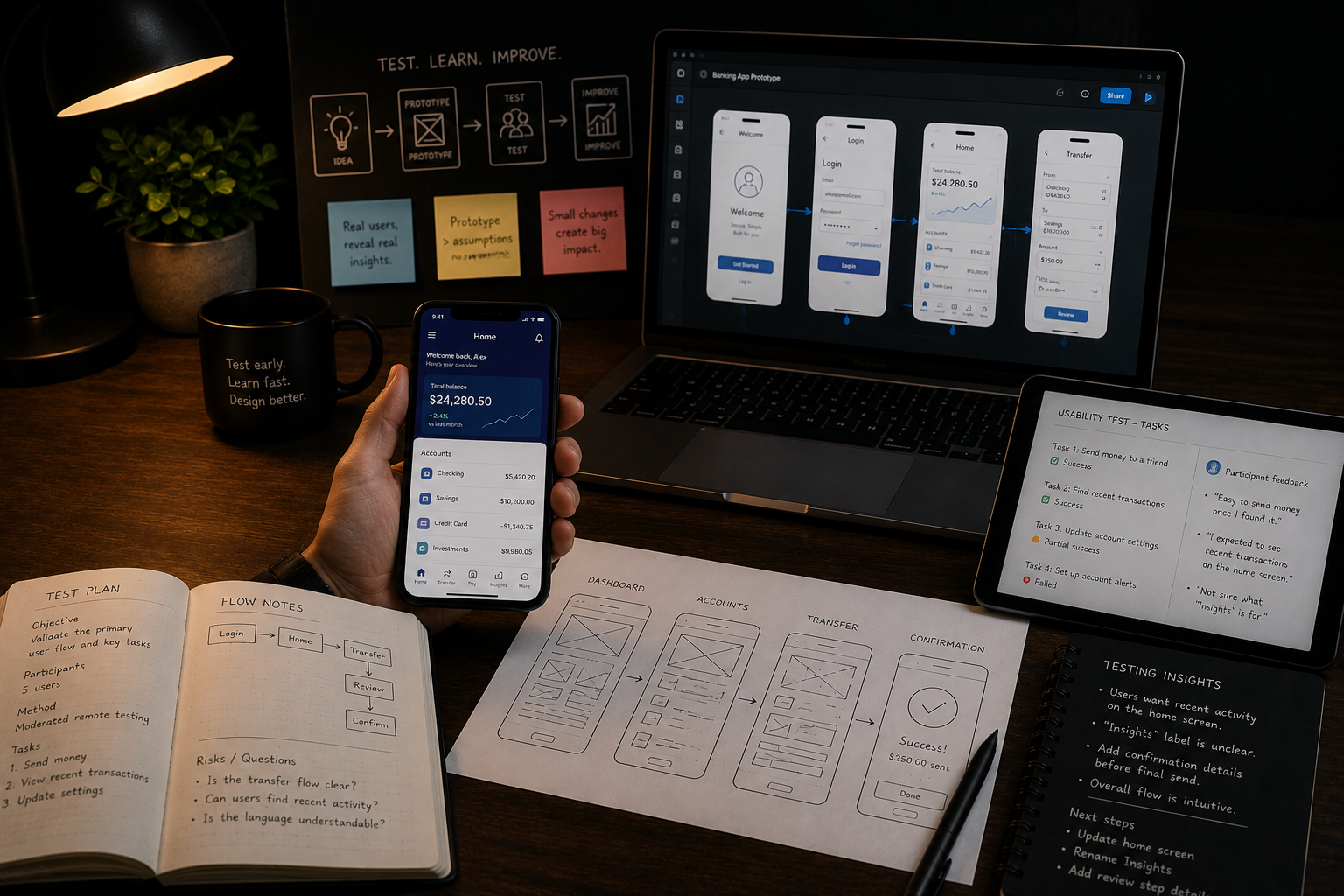
Interactive Prototyping & User Testing
Interactive prototypes make it possible to experience and test a design before committing to full development.
Testing those prototypes with users can reveal confusing interactions, missing information, and opportunities to improve the experience while changes are still relatively easy to make.
Common Applications
Testing new product concepts
Validating website and app flows
Feature testing
Task-based user testing
Pre-development design validation
Deliverables
Clickable prototypes
User testing plans
Testing findings
Design recommendations
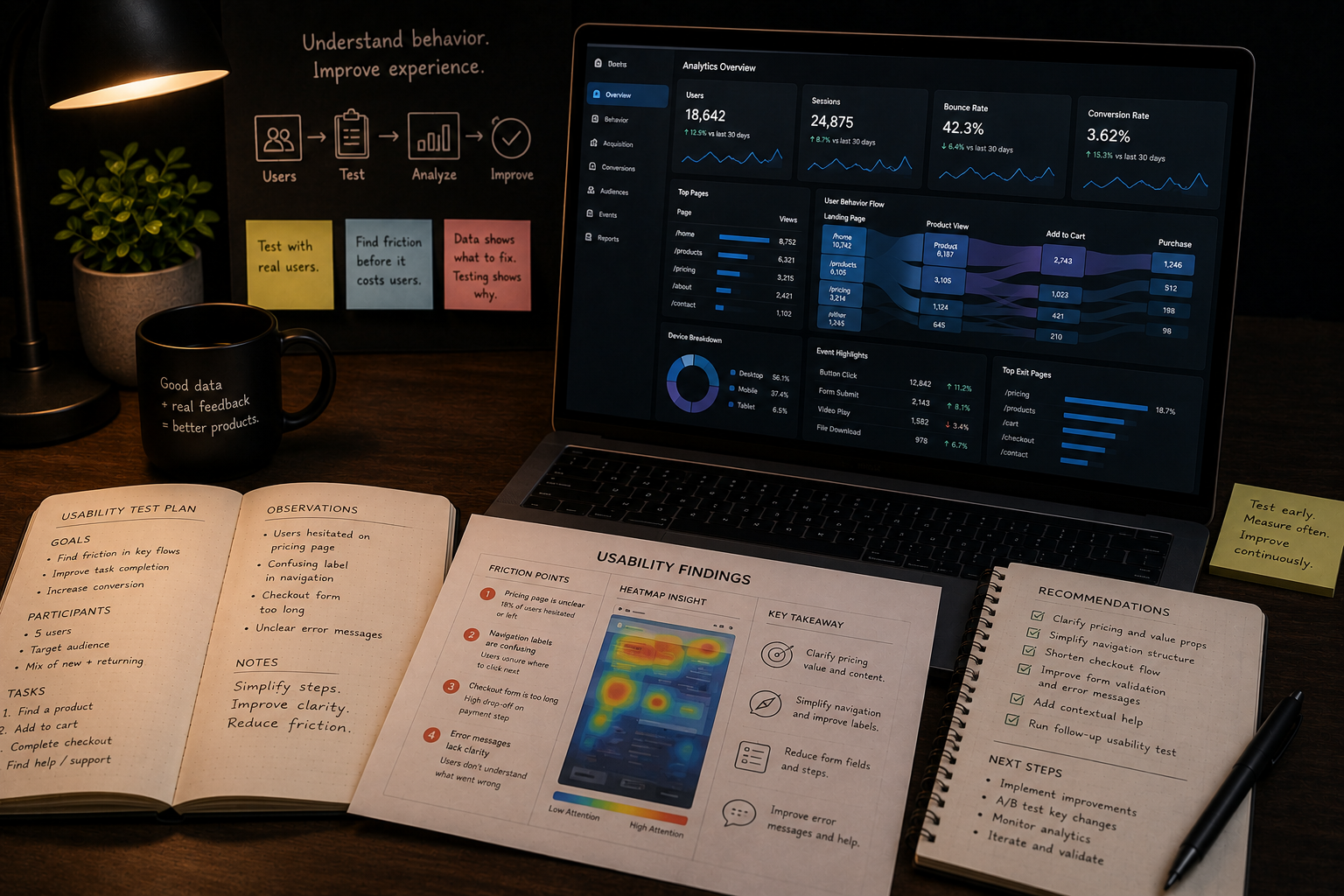
Usability Testing & Analytics
Usability testing and behavioral data can help identify where an existing product, website, or workflow is causing unnecessary friction.
Testing, analytics, feedback, and observed behavior can be combined to prioritize improvements based on how people actually use the experience.
Common Applications
Existing product reviews
Website usability evaluation
Conversion and form flows
Task completion analysis
Ongoing product improvement
Deliverables
Usability findings
Analytics observations
Friction point summaries
Prioritized improvement recommendations
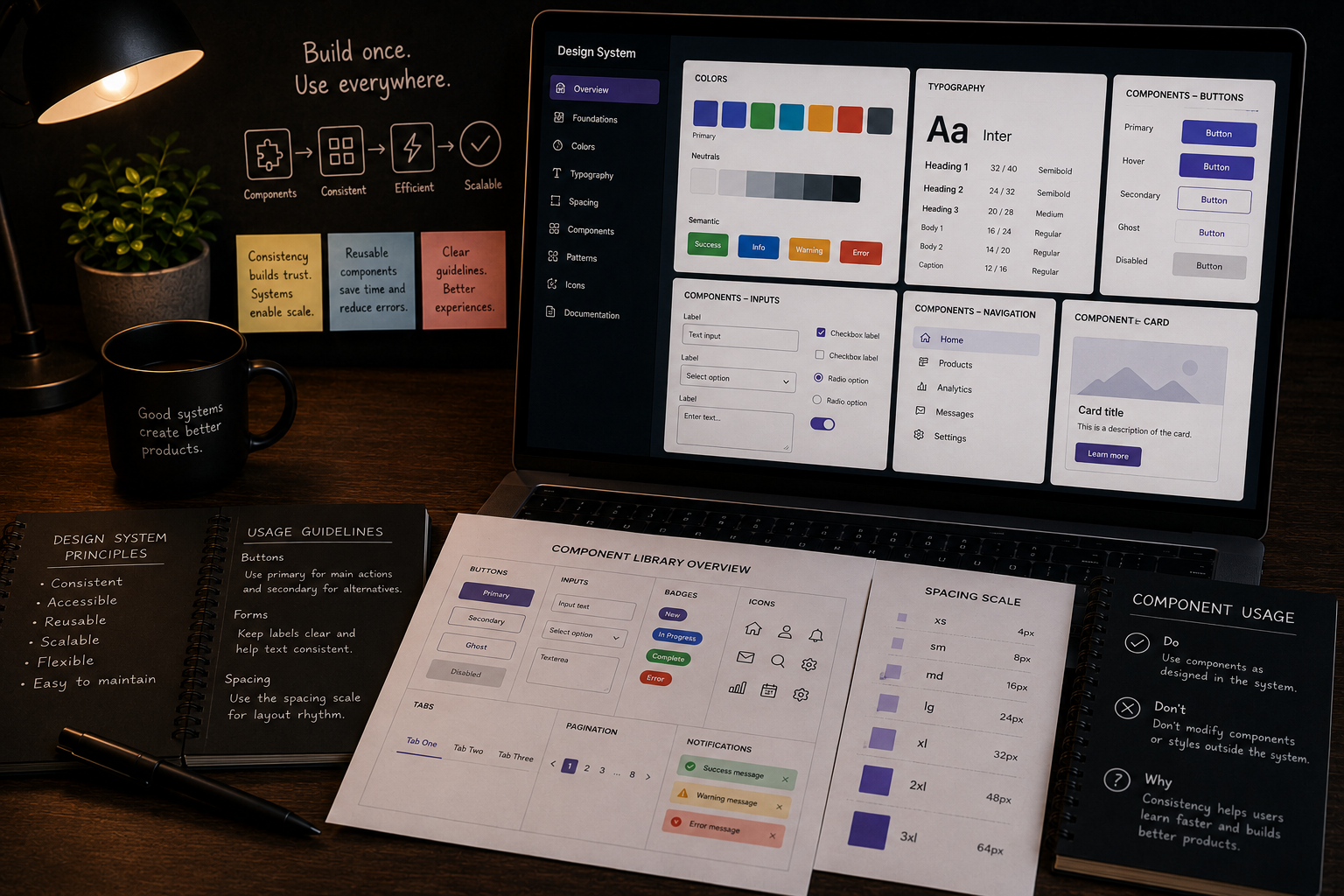
Design Systems & Component Libraries
Design systems create reusable interface patterns that help products remain consistent as new screens, features, and workflows are added.
A system can range from a lightweight component library to more detailed guidance covering typography, color, spacing, forms, navigation, and interaction patterns.
Common Applications
Reusable UI components
Product consistency
Website and app scaling
Developer handoff
Reducing repeated design work
Deliverables
Component libraries
Reusable interface patterns
Typography and color guidance
Design system documentation
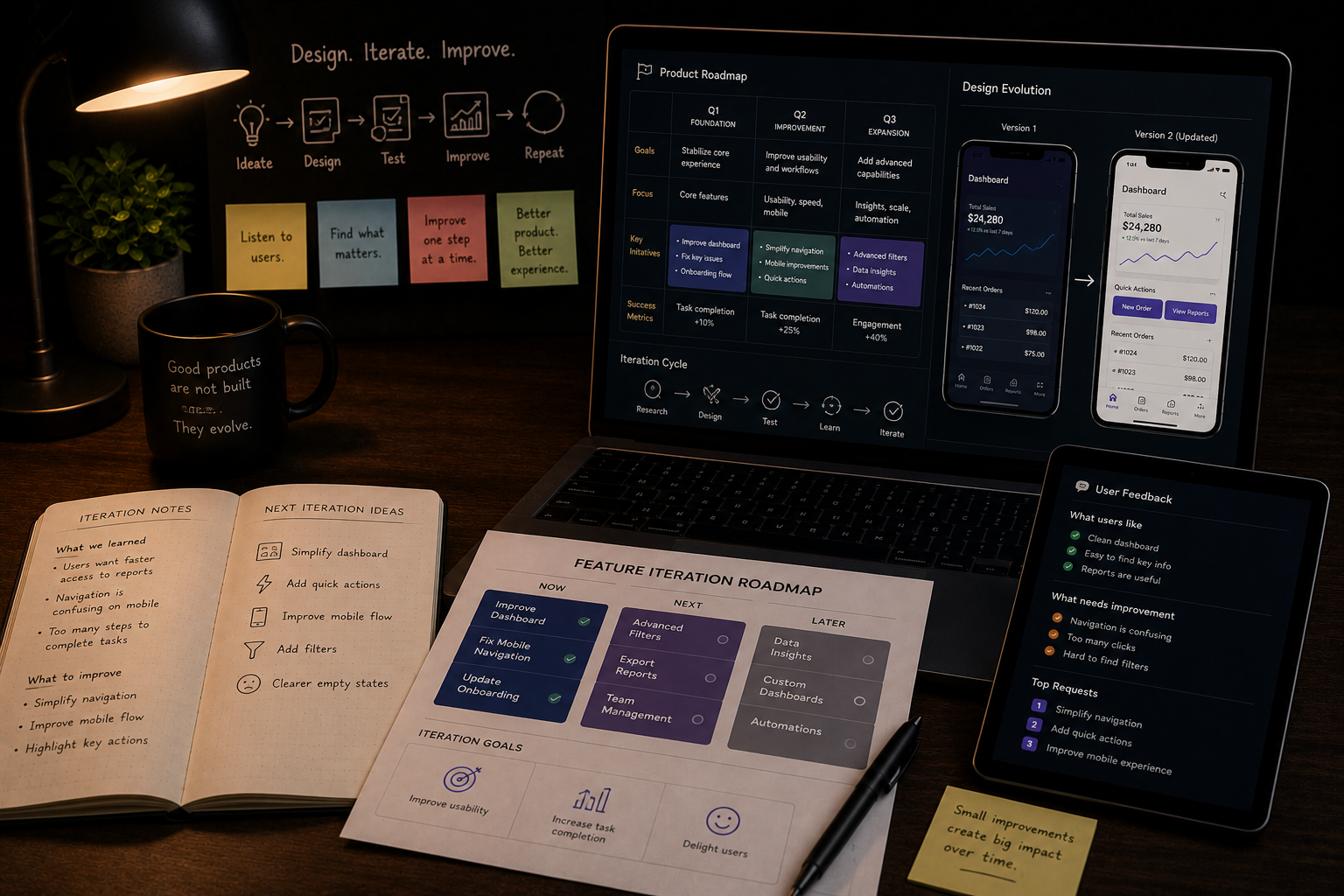
Product Design & Iteration
Digital products continue to evolve after launch. Product design and iteration help improve features, workflows, and interfaces as new needs, feedback, and priorities emerge.
Support can range from improving a single workflow to ongoing design work across a larger product.
Common Applications
Existing product improvements
Feature design
Workflow redesign
Post-launch iteration
Ongoing product support
Deliverables
Updated interface designs
Feature concepts
Workflow improvements
Design handoff files
And More
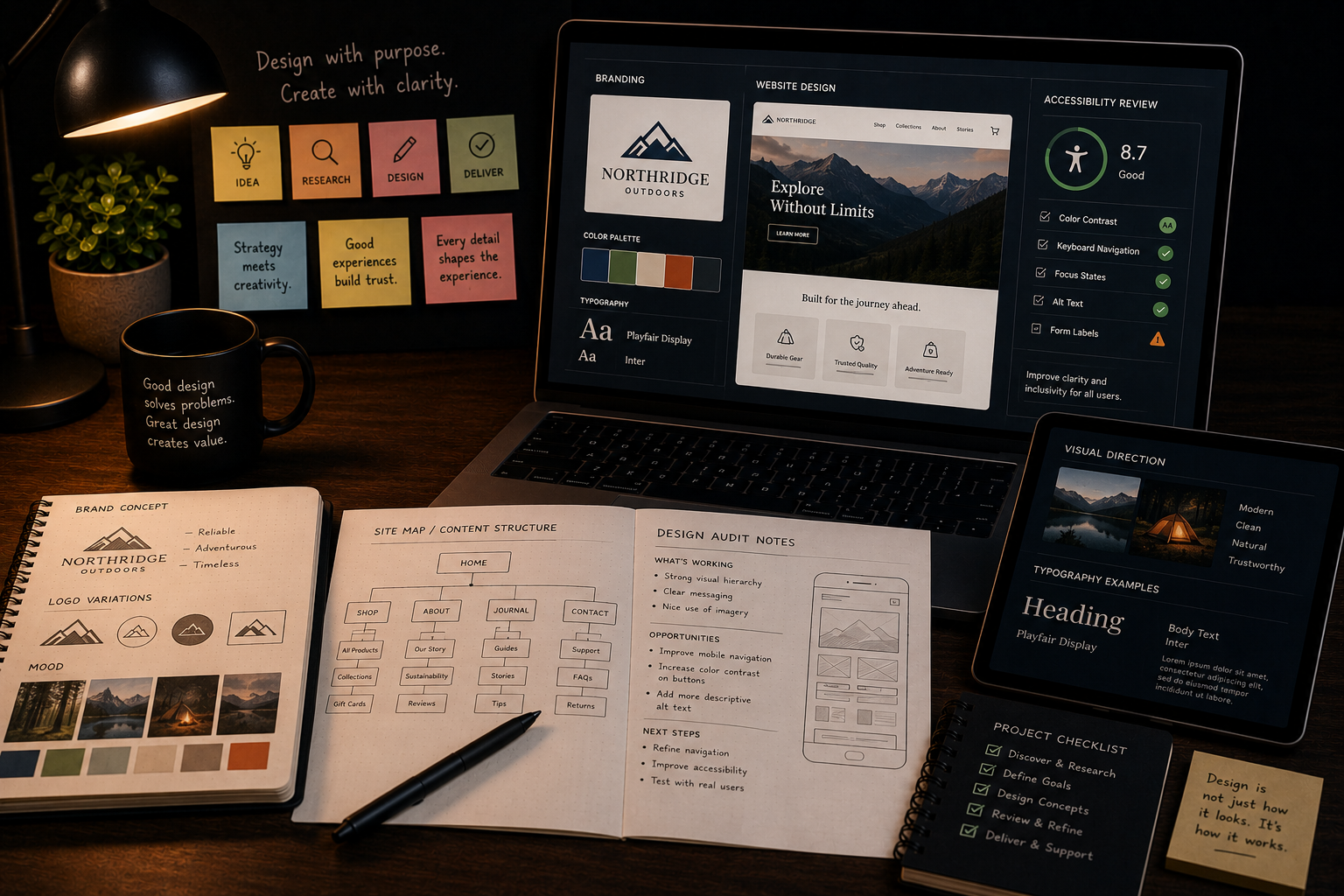
Not every project fits into a traditional UX or product design process. I also take on select website, branding, accessibility, consulting, and other digital design projects.
The scope can be tailored around a specific problem, an early-stage idea, an existing experience that needs improvement, or a project that simply needs experienced design support.
Common Applications
Website design
Branding and visual identity
Accessibility reviews
Design audits and consulting
Content and page planning
Design QA and delivery support
Deliverables
Website and interface concepts
Brand and visual direction
Accessibility or design review findings
Project-specific design files
Design Process & Delivery
Each project starts with understanding the problem, the people using the product, the business goals, and what needs to be delivered. The process can include research, planning, design, prototyping, testing, and iteration depending on the scope.
Final deliverables are organized for the project and can include design files, prototypes, research findings, documentation, component libraries, and developer-ready handoff materials.
Frequently Asked Questions
-
I work on websites, mobile apps, web applications, dashboards, internal tools, and other digital products. Projects can range from early product discovery and UX strategy to interface design, prototyping, testing, and ongoing product improvements.
-
Yes. I can review an existing experience, identify usability or workflow problems, and help redesign specific features, screens, or larger portions of the product.
-
Yes. Depending on the project, I can support research, discovery, user interviews, journey mapping, wireframing, interface design, prototyping, usability testing, and design iteration.
-
Yes. My design work can include marketing websites, product websites, web applications, mobile apps, dashboards, internal tools, and other digital experiences.
-
Yes. I can work alongside developers, product managers, researchers, and other stakeholders, and provide organized design files, specifications, prototypes, component guidance, and developer-ready handoff materials.
-
Yes. I can create or improve component libraries and design systems to help keep interfaces consistent and make future design and development work more efficient.
-
Yes. I can provide focused usability testing, design audits, accessibility reviews, workflow reviews, or consulting without requiring a full product redesign.
-
Yes. My UX and product design portfolio includes examples of research, product design, interface design, prototyping, and other work from more than a decade of design experience.
Have a Design Project in Mind?
Tell me what you’re working on, where the project stands, and what kind of design support you need. I can help determine the right scope and next steps.